November 2026
SBA 504 Rates:
25 yr 6.57%
20 yr 6.58%
10 yr 6.58%
Oregon MIRL
Oregon’s MIRL program helps cities finance housing by using
state loans and temporary property tax exemptions.
Oregon’s MIRL Program
A New Financing Tool for Local Housing Development
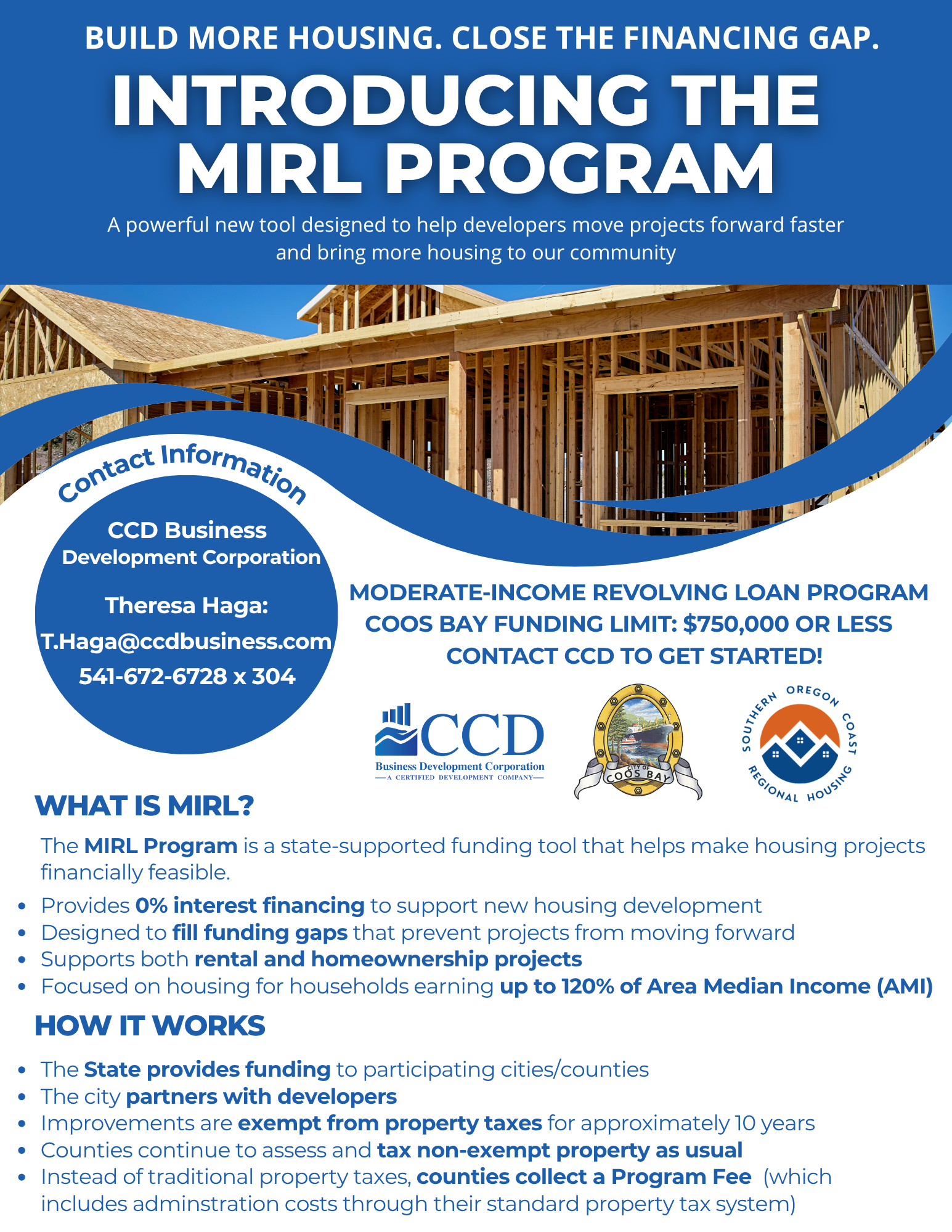
The Moderate-Income Revolving Loan (MIRL) program is an Oregon housing tool that helps cities finance new housing for households earning up to 120% of median income. The state provides no-interest loans to cities, which support developers while temporary tax exemptions repay the funding.
For Governments
How governments can utilize this program.
For Governments
Cities and counties that want to participate in the MIRL program must first adopt a local ordinance or resolution establishing the program. The local government then enters into an agreement with Oregon Housing and Community Services to receive a no interest loan. After establishing the program, the city or county creates a local application process for developers seeking MIRL support and defines eligibility standards that align with state requirements.
Once a project is approved, the local government provides funding to the developer in the form of a grant or project subsidy. The government also administers the property tax exemption for the improvements and establishes the annual program fee that replaces those taxes. Over time, the city or county collects those fees and uses them to repay the state loan while monitoring compliance with affordability and program requirements.
For Developers
How developers can utilitze this program.
For Developers
Developers interested in using MIRL must first identify a housing project that serves households earning at or below 120 percent of area median income. The developer prepares a project proposal demonstrating the financial gap that prevents the project from being feasible without support and submits the proposal to the participating city or county administering the MIRL program.
If approved, the developer receives local funding support to help offset project costs such as land acquisition, infrastructure, or construction. The developer then builds the housing project in compliance with the affordability requirements. After completion and occupancy, the developer receives the property tax exemption on improvements and pays the required annual program fee that replaces those taxes.
For Homeowners
How this program benefits homeowners.
For Home Buyers
Homeowners participate in the MIRL program indirectly through the housing that is built using program support. Individuals interested in purchasing or renting MIRL supported housing must meet the program income requirements, typically earning at or below 120 percent of the area median income. Buyers or renters work through normal real estate channels to secure housing in these developments.
Once occupying a MIRL supported property, homeowners benefit from housing designed to remain attainable for moderate income households. In some cases, the program fee associated with the property may be reflected in association dues or ownership costs rather than traditional property taxes on improvements during the exemption period.
For Professionals
How this program helps agents & lenders.
For Professionals
Real estate agents, lenders, and title companies participate in the MIRL program by supporting transactions connected to MIRL supported developments. Agents help market and sell homes that qualify under the program while ensuring buyers understand the income eligibility and program structure tied to the property.
Lenders and title companies facilitate the financing and legal documentation required for these transactions. Lenders underwrite mortgages for qualified buyers and may incorporate the program fee structure into financial calculations. Title companies ensure the proper recording of program agreements, tax exemptions, and property ownership documents related to MIRL supported housing.
Document Library
For participating organizations we have a number of examples for you to use when implementing, executing, or modifying a MIRL project.
Please be aware that these are examples and may not fit your exact needs.
If you need assistance figuring out which document is for you, please contact us.